Decide which units leave first
What this does
When the same product sits in several places, several packages, or arrived on several dates, the removal strategy decides which exact units a reservation grabs — and therefore which units the picker is told to take. It is a policy you set once, on a product category or a storage location, and it applies at every reservation after that. Four strategies exist on this system: First In First Out (FIFO), Last In First Out (LIFO), Closest Location, and Least Packages. There is no expiry-based FEFO here — expiration-date tracking is not enabled on this system.
Before you start
- For location-level strategies: the Storage Locations feature and access to Inventory › Configuration › Locations.
- Honest location names, if you plan to use Closest Location — it follows the alphabet, not the floor plan (below).
Setting a strategy
-
01
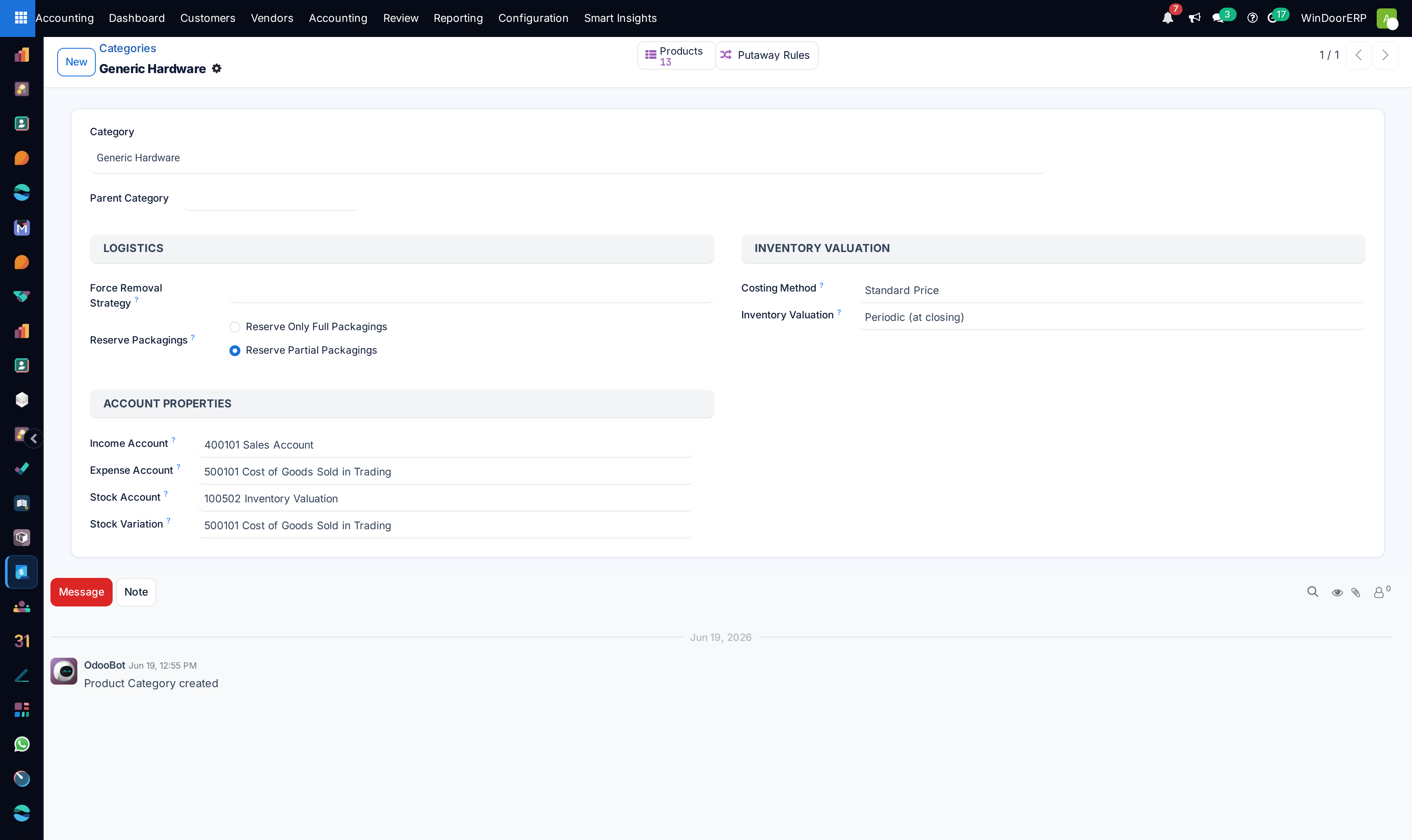
For a product family: open Inventory › Configuration › Product Categories, pick the category, and set Force Removal Strategy in the Logistics block.
-
02
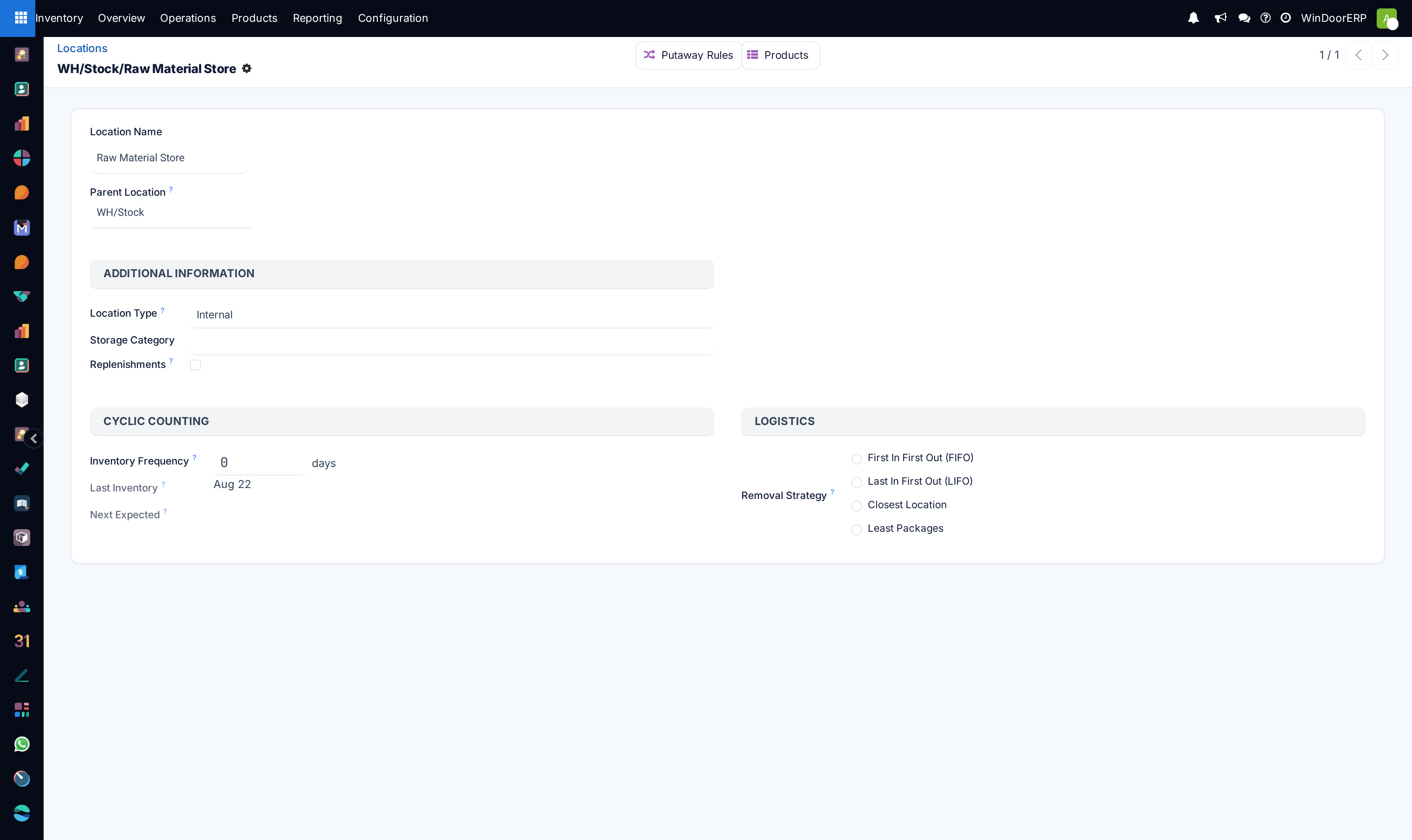
For a place instead: open Inventory › Configuration › Locations, pick the location, and choose a Removal Strategy in its Logistics block.
-
03
Leave both empty to keep the default — FIFO, everywhere.
-
04
Check the precedence if you set both: the category always wins ("force" is meant literally); the location is consulted only when the category is silent, and a sub-location without a strategy inherits from its parents.
What each strategy really does
FIFO takes the units with the oldest incoming date first — the rotation default, covered in its own article. LIFO is the mirror: newest first, for the rare stack where the last pallet in is the only reachable one. Closest Location deserves its honest description: it sorts the candidate sub-locations alphabetically by their full name and takes from the first. It approximates "closest" only if your location names are deliberately coded in walking order — and it sorts as text, so Shelf 10 comes before Shelf 2. Least Packages is the only strategy that looks at the quantity being asked for: it searches for the smallest number of packages whose contents exactly cover the demand (three 40-unit boxes rather than opening five), preferring an exact fit, and falls back to plain FIFO — silently — when the stock is not in packages at all.
Two behaviours apply whatever you choose. Units carrying a lot or serial number are consumed before untracked units of the same product. And the strategy is consulted at reservation time only: changing it never re-shuffles what is already reserved — the new order applies from the next Check Availability onwards.
What this system runs today
Nothing is set: every product category and every location on this system leaves the strategy empty, so all removal is FIFO by default. That is a reasonable place to be — set a strategy when a real flow demands one, not because the field exists.
Troubleshooting
Changed the strategy but pickings did not change — existing reservations keep their units; unreserve and re-check availability to apply the new order, and only new reservations follow it automatically.
Closest Location picks a "far" shelf — the sort is alphabetical on the full location name; rename locations into a deliberate order or accept the alphabet.
Least Packages ignored the packages — it needs the stock to actually be in packages; loose stock makes it plain FIFO with no warning. It also gives up on impossibly large searches the same silent way.
Looking for FEFO — expiry-date tracking is not enabled on this system, so no expire-first strategy is offered.
Common mistakes
- Setting a location strategy and wondering why it is ignored — a category's Force Removal Strategy overrides it every time.
- Naming locations casually and then trusting Closest Location — the alphabet is the routing.
- Treating the strategy as a physical guarantee — it decides what the system reserves; what the picker actually grabs is still recorded (and correctable) on the operation lines.
Was this article helpful?
Thanks — your feedback helps.
Running a window or door factory?
Ask for a demo